Thursday, September 12, 2024

Term 3 Reading Survey Reflection

Coming to the end of RPI it was interesting to redo the Reader Survey. It seems that overall there has been a small shift in the students' enjoyment of reading at school and also their enjoyment of reading in their own time. There was also a small change in the time that they enjoyed reading. in term one the most common time they enjoyed reading was at school, in term 3 there were more students who enjoyed reading at home, particularly before falling asleep. It would be interesting to find out more about what has changed for them and why they enjoy reading at home more. Are they finding books that they are enjoying and therefore what to be reading at home more or is there something about reading at school that is discouraging?

A highlight from the survey was that one student's response was that to be. a good reader you needed 'fluent thinking, a good vocabulary and imagination.' When I asked them what they meant by fluent thinking they described reading aloud fluently. It was great to see this response because these are skills we have been teaching. 


Tuesday, August 20, 2024

Day 8: Creating in Reading

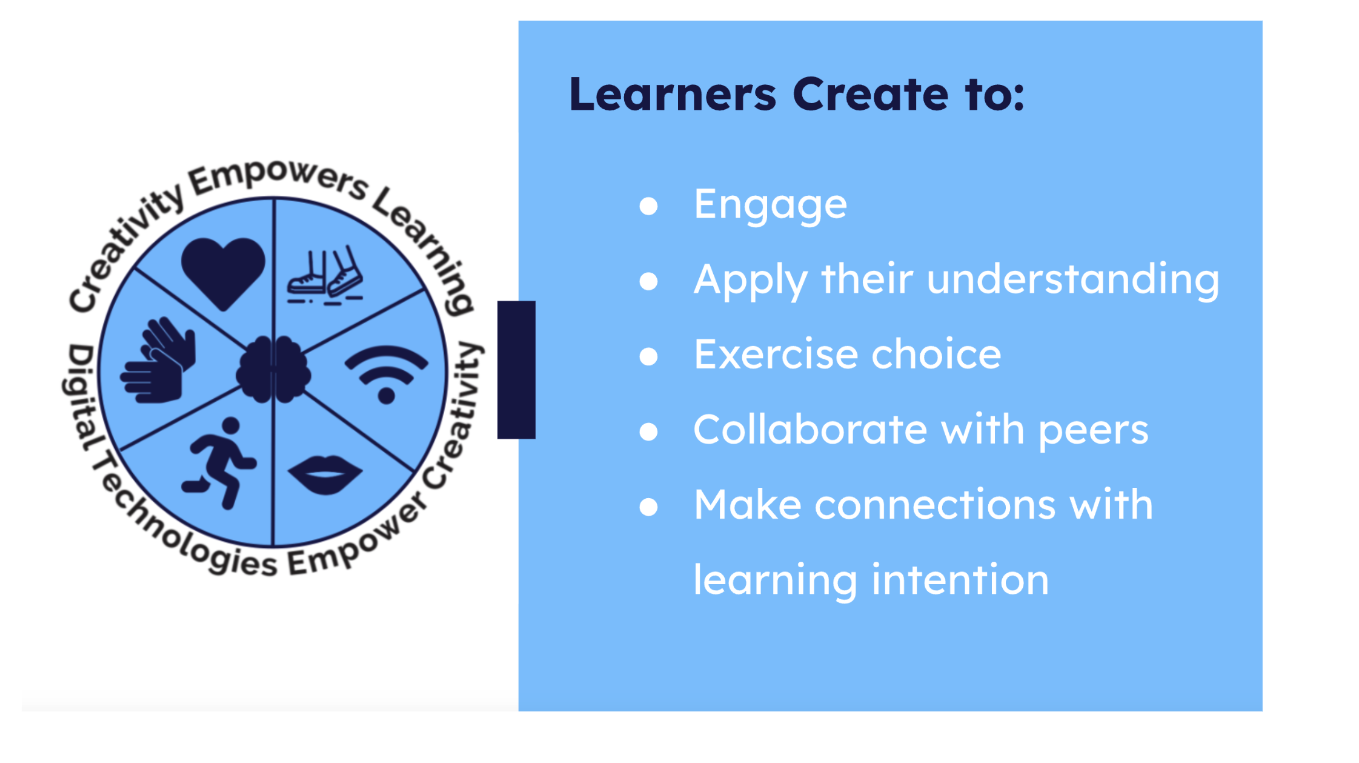
This week we have been learning about creating in reading. I really enjoyed the hands-on and practical nature of this week's focus. Dorothy had some good reminders about the purpose of create within our programmes for engagement and also developing skills such as collaboration. Dorothy's comment about how we want our students to be creators of content rather than just consumers of it really made me think about how we are setting our students up with these skills through the create opportunities we provide.

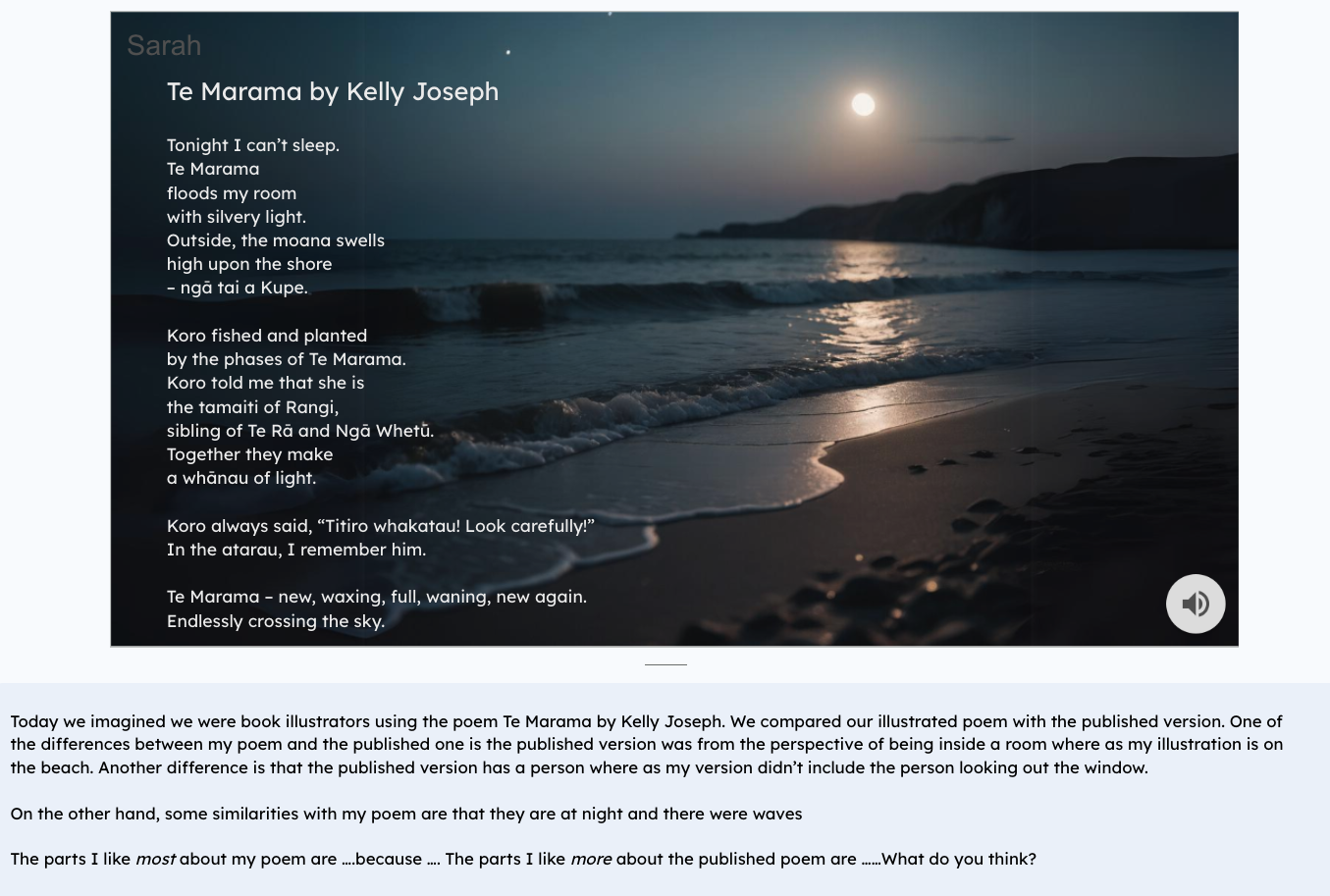
The poem activity where we illustrated a poem was a really simple but effective activity. I had a go at using Canva for the illustration with the app Moji AI. It was interesting to see what image was created for the verse of the poem. I thought the learner reflection template was a good scaffold to reflect on the comparison between the original illustration and the one that was created. I could see how this could be used in other ways like with characters or settings. Earlier in the year I had done a similar thing with descriptive writing where learners used keywords to describe a planet, then used Craiyon to create the planet before writing a description of their planet. I liked how today's activity showed how it can link to reading and writing.


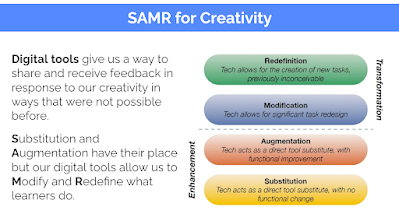
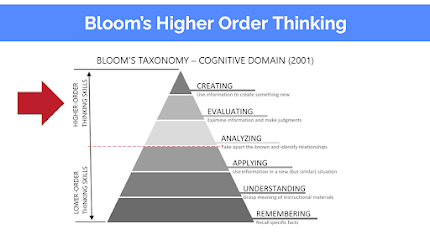
Create is such an important aspect of the learning process it helps to support deeper learning and brings in higher-order thinking. I did think the point about not underestimating the power of Google tools for create was important. Sometimes I think our students being able to use a few tools well and understanding what tools are useful for different tasks is more useful for giving students choice in their create tasks than having a huge range that they don't really understand. It was also helpful to bring the SAMR model back to the forefront to think about what the task is actually doing for our learners.

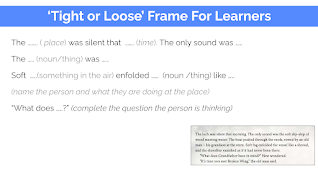
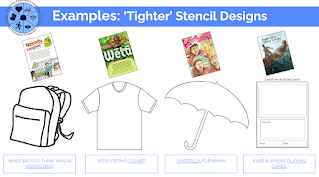
The examples of shorter responses to text tasks were also helpful as sometimes it feels overwhelming trying to fit create tasks in, especially tasks that also allow for collaboration and reflection. It was good to have some options for 'tighter' create tasks, which still gave students opportunities to think and create but were easier to fit into the reading programme.
A goal for me is to plan for more collaborative create tasks. I feel that pictures, videos or podcasts may be a good place to start. I liked the idea of the one-shot film, as it was a quick way for students to record and share their create tasks while also developing the skills involved in working with others.


Tuesday, July 30, 2024

RPI Day 7: Thinking

I have been looking forward to our day on thinking. I enjoy the discussion that critical thinking and critical literacy promote in my reading groups. The points that Dorothy brought up about our students being online were so valuable,  even at Year 5 and we have so many of our students in a vulnerable position online. I really enjoyed hearing how the critical thinking aspects of Maniakalani’s pedagogy support students to be smart online. Teaching critical thinking is more important now than it ever has been before.

I am looking forward to exploring Adobe Express podcasting, and will put text to voice. I think it will be great to introduce after some of our students having taken part in a podcasting workshop last term, we will be able to continue to use those oral language skills and recording skills.

It was good to go back to see the progress of thinking from literal through to the higher-order thinking skills. It was a chance to think about the difference between interpretive questions and evaluative questions,  I often find it challenging to be certain of the difference between these, but I like the point that Naomi made about evaluative questions often having an element of interpretation within them. 

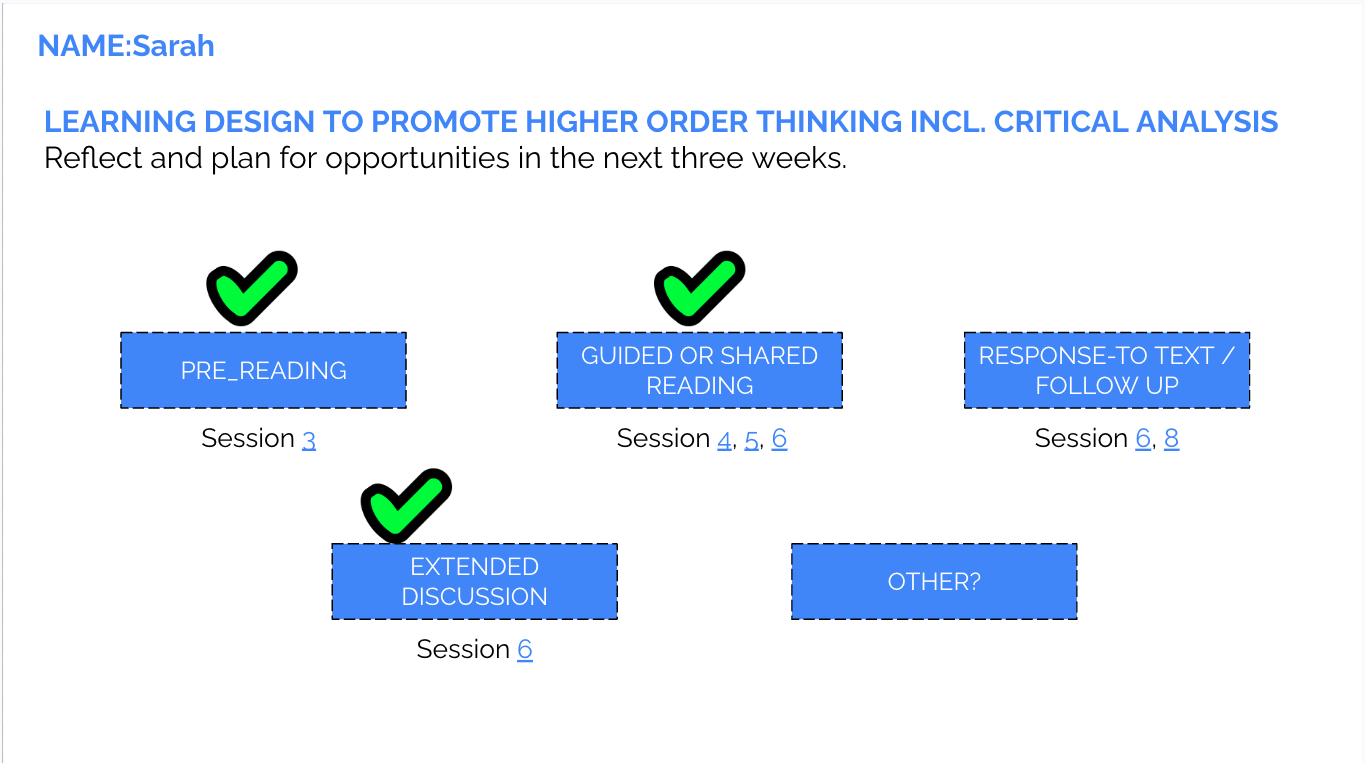
At the end we were given the opportunity to reflect on what aspects we will use over the next few weeks to develop higher order thinking. While I would love to focus on developing all areas, I feel with the time it takes to implement new learning I am going to start by focusing on a couple of aspects. I will target the pre-reading activities and the provocations during guided reading, using these to support our focus on extended discussions.  I really liked the example of the bungy jumping pre-reading activities as they gave students some prior knowledge of the topic and a chance to think about the topic more critically prior to needing to share their ideas with others. I hope this also gives students more confidence to share by feeling more prepared and having the opportunity to process ideas.

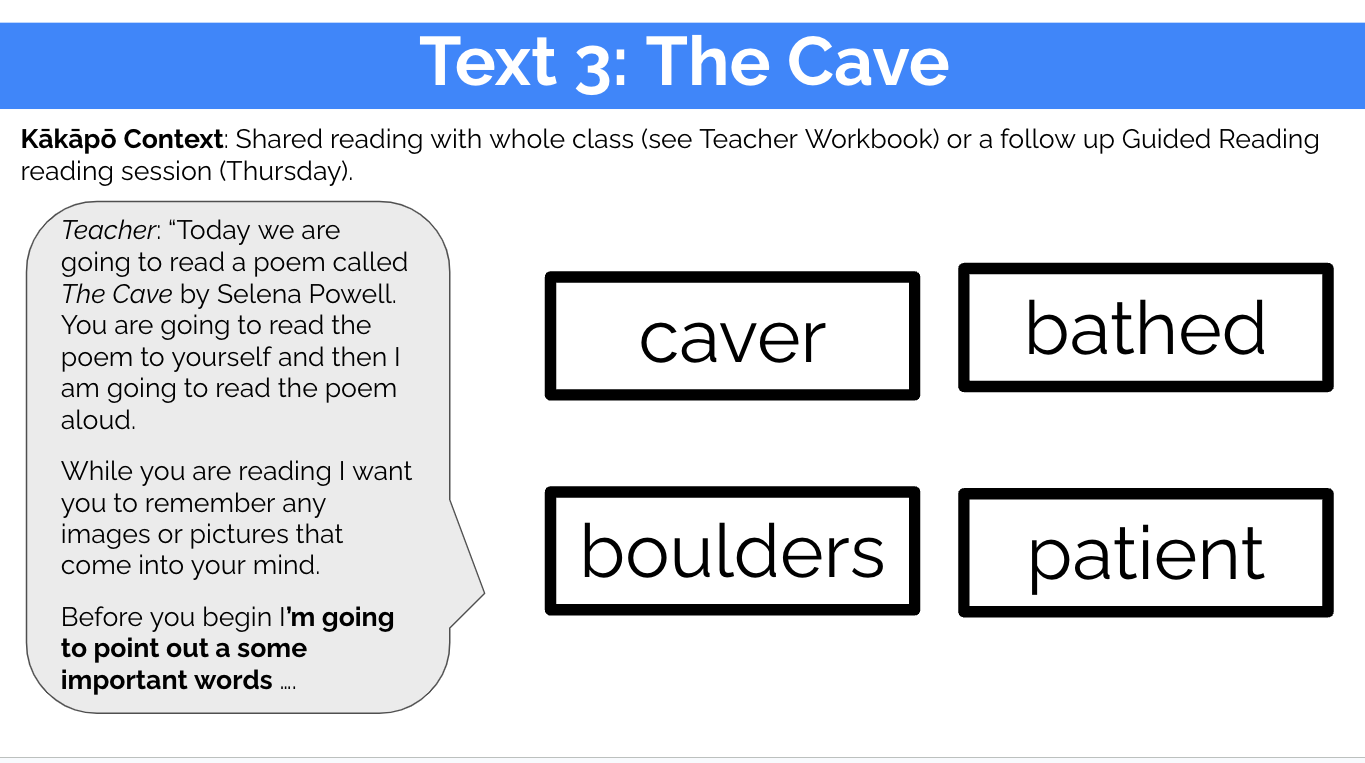
Today I felt like we were given some valuable resources that I'm able to take back to use in the classroom, as well as being given opportunities to think and plan ideas for coming weeks. The lesson on the Cave Poem was great for figurative language and I think I will have a go with this later in the term.

I am looking forward to using the analysing figurative language activity. I am going to use this in a couple of weeks when we start to look at advertising.


Sunday, July 28, 2024

Word work

As part of the focus from RPI we have been looking at word work on Morphology. 

Teacher Workbook


The teacher workbook has been helpful for incorporating word work into planning. Having the learning intentions there when planning keeps them at the forefront of my mind during the planning process, as in the past morphology was often a part that was missed,  I would focus on teaching new words from the text rather than knowledge to support students to understand a more extensive range of words using their knowledge of
morphology. 

When planning I have been choosing a strategy-based learning intention and a word-based learning intention and focusing planning around these. I have used the student's 'must do' activity to provide activities related to morphology and have also been trying to look for these words in our texts as teaching points. 

I am looking forward to seeing the impact these changes have on my student's word knowledge over the rest of the year.

Adjustments to Practise

From the learning I have done at RPI, there are a few things changes I have made to my Reading programmes and my own practice.

Guided Reading Framework

I have found the guided reading framework useful when planning my reading. It has given me more structure in my guided reading sessions. In the past I would put more emphasis on the comprehension strategy I was teaching and often other components, like discussion or vocab, were brushed over during the lesson. It has helped my thought processes when planning and feeling less overwhelmed because I know I have covered all bases of a well-structured guided reading session.


Vocabulary

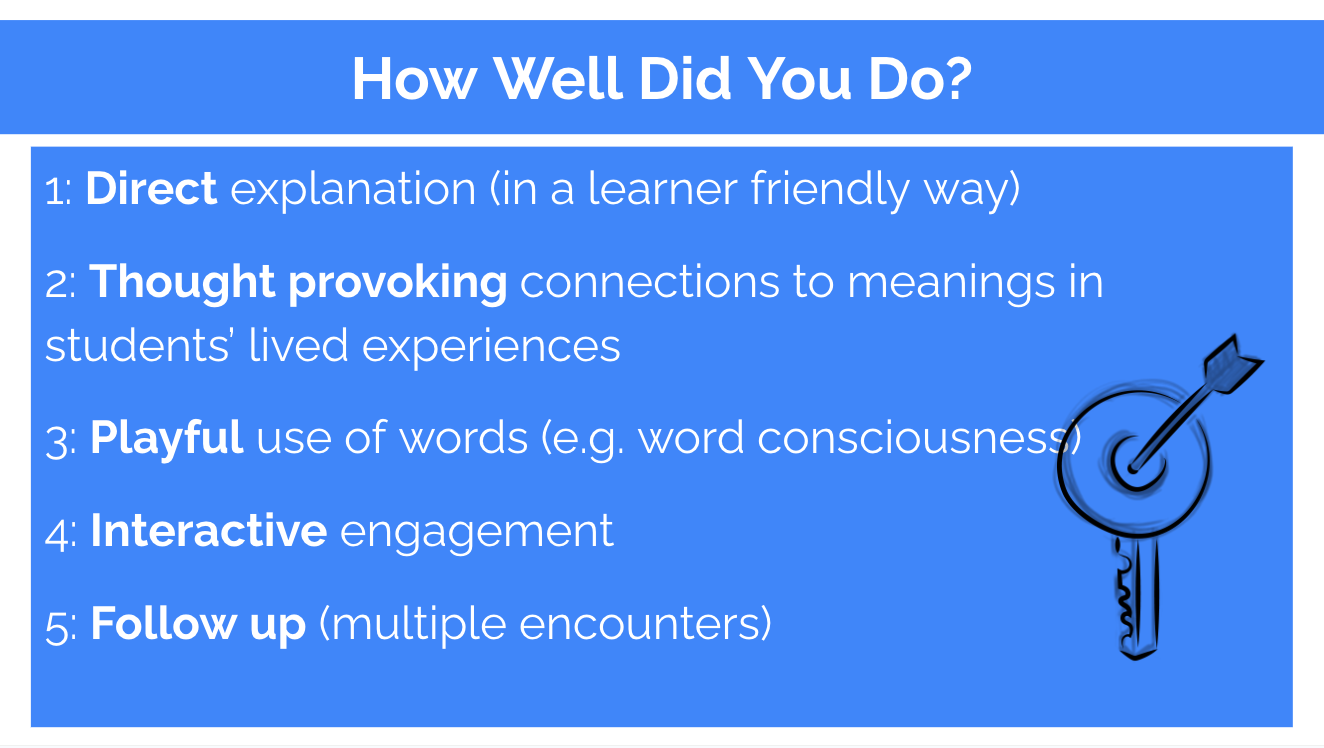
On thing that really stuck with me was idea of vocab knowledge being a big predictor of reading success. Over the course of the RPI I have built up the amount of vocabulary activities I have been using, from adding them into the response to reading tasks to beginning to use the Robust and interactive vocabulary activities. I particularly enjoyed using the spotlight activity as it gave me a good picture of which words to focus on during my guided reading sessions. 

I have also found that my teaching focus has shifted more from tier 3 words to tier 2 words. I think I used to focus on the more topic-specific / jargon-based words from a text. I have also been aware of discussing the contexts of the words and looking at words that can be used in various contexts.


Timetabling
While I haven't changed a lot with my timetabling I find my class needs direction/ structure. One thing I have done to build some independence is on days that groups aren't with me, I have added a must-do activity and then some choice options.  I am finding that this has been a good step to build independence and hopefully, I can give more of this time as the year progresses.


Friday, June 21, 2024

RPI, Day 6: Vocabulary (and decoding)

 Hi everyone, 


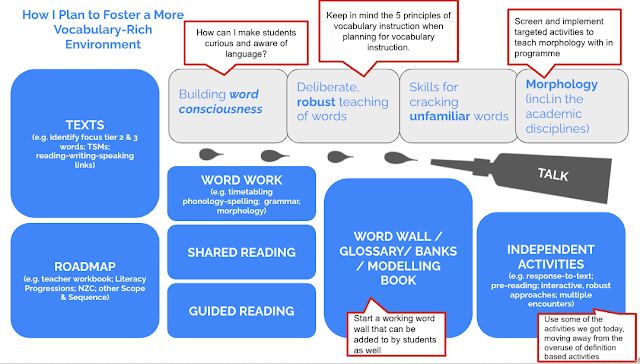
I have really loved the practical ideas of today's session about developing a vocabulary-rich programme. It really gave me the opportunity to reflect on my own programme and the role of vocabulary within my programme. 

On reflection, I think there are definitely gaps that I can fill in my practice and can also extend the range of learning opportunities for vocabulary within my programme. 

The fact that vocabulary is the biggest predictor for reading comprehension really brought to light for me the importance of this in my programme, making it even more important was the data around the lower decile schools in Auckland. When comparing students from lower decile schools with students from higher decile schools, there is a hugely significant gap in the exposure to words before school. Students at higher decile school were exposed to an average of 30 million more words in the first 5 years meaning many of our students are disadvantaged before they even start school. We need to be supporting our learners by exposing them to language. Extending on this though is the importance of morphology in reading comprehension as it means that they can make connections and understand the meaning of a greater number of words because they understand the meanings of root words.. It is important to wave vocabulary throughout teaching and learning.

Currently, I look at vocab and discuss the vocab during the text introduction and might stop during the guided reading session when words come up in the discussion. Each week we have a vocabulary activity but often they ask students to define the word or write it in a sentence. Some of my groups do morphology activities, however this is not consistent.  

I thought the 5 principles from The Fertility of Some Types of Vocabulary Instruction (Beck et al)  were good to keep at the forefront of my mind when planning vocabulary activities.


There are a few things I am going to try in my programme:

  • Start a word wall - I want to have this with cards that students can also add to 
  • Use of Google Docs - I want to explore the use of Google Docs as a simple way to add cloze reading activities in using the smart chips. 
  • Making use of the audio dictionary to give learners more access
  • Using puzzles to provoke thought and fun in vocab learning, I like the idea of the rebus puzzles or riddles, or having a wordle display for students to take part in, possibly a challenge displayed each week.
  • Spotlight activity or the traffic light for pre-reading assessment on students' word knowledge. 
  • Use the initiator, builder etc prompt cards for extended discussions
  • Do some screening of morphology and add more targeted morphology instruction into my programme, this could be done through shared reading, guided reading and linked to independent activities learners are doing. 


Thanks for reading.

Tuesday, May 28, 2024

RPI Day 5: Planning a Reading Programme

 Today's session was all about planning a reading programme. 

It was great to have the reminder about why our use of sites is so important for our students learning. It brings back the purpose and has made me think about how I utilise my site for reading, and whether I could lay it out in way way that my students would get more from it. I think I may be cramming too much onto the slides rather than the site.

There were a few resources that I found today that I would like to explore more and use it in my programme. 

Epic - we currently use this and I have recently been exploring it a bit more. I thought that it was cool to see that there are texts to support different writing genres too. 

Readworks - I think this will be a really good one to replace read theory with a bit more customisation to the learning intentions we focus on. It is a bit more targeted and controlled than read theory. 

I am also keen to look at Muzify, I think it will really engage our students into thinking about their texts.
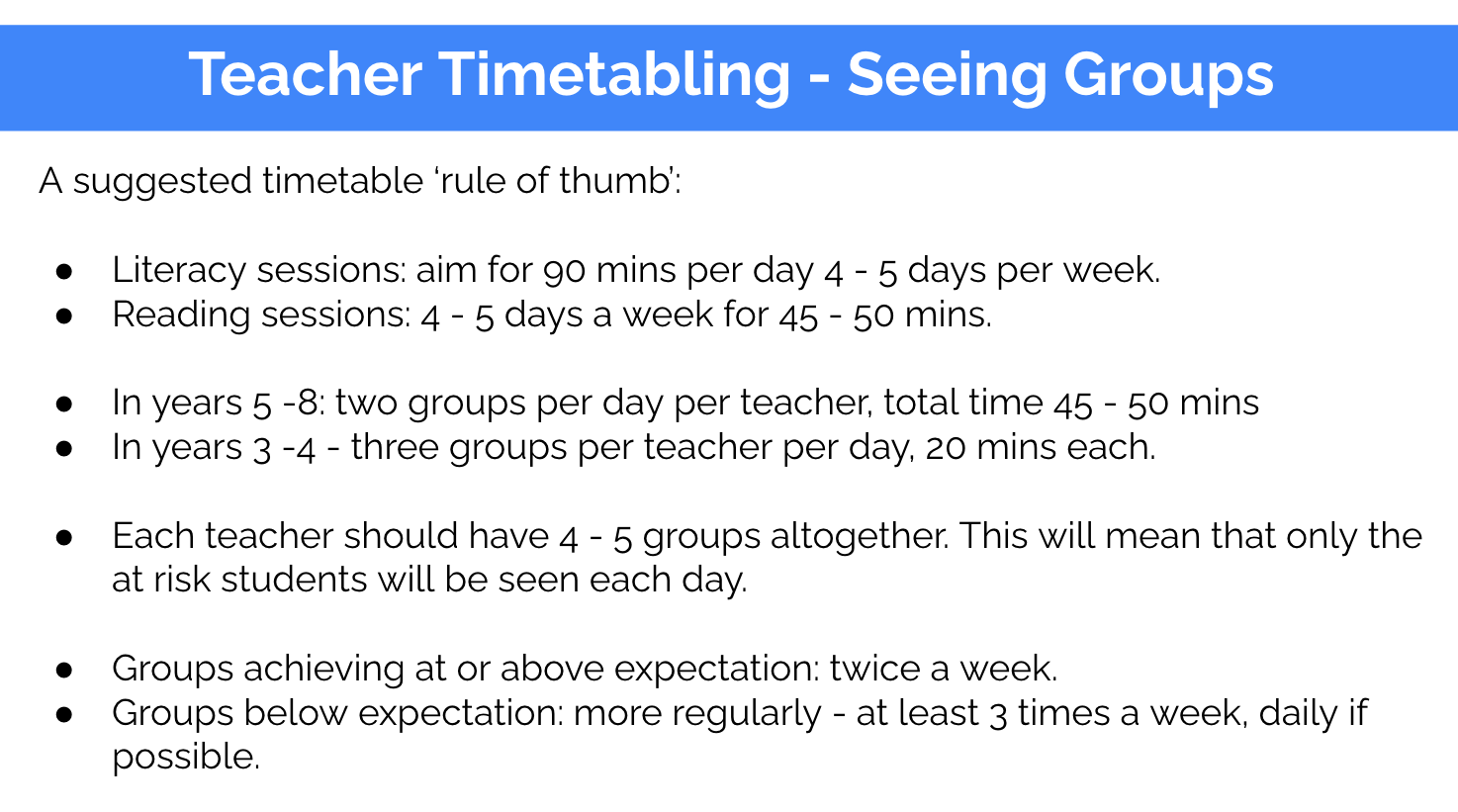
It has been good to think about our timetabling in our class. I wonder if I am trying to do too many groups each day and whether building some conferencing into the reading programme to support the independent learning task would be beneficial for task completion and supporting students to get more out of the tasks they are completing.

I am also going to look at the Mahi tracker in digital form. I liked the idea of the sparkline as I think that will be a good motivator for students to see their work completion and for me to quickly see how they are progressing with their work across the week. I was also mind-blown to learn that you can protect cells in a sheet so only the people who are shared into that particular cell or row can make changes to it. This means that the Mahi tracker can be shared but students can only tick and link things on their own row.  
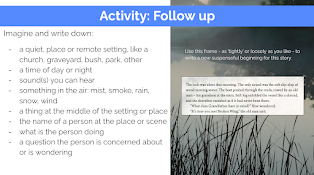
   

I really liked the session on Read Like Writers, Write Like Readers. Focusing on structures within texts they are reading to support structures in writing is a powerful way to teach. The activity we did in writing our own paragraph made it feel achievable to write an effective paragraph. By starting with those question prompts, only having to think of the keywords, it made it easy to then fill in the gaps to create sentences, it also meant that when filling in the gaps the cognitive load wasn't on what was happening as much but filling out the details in sentences. It was nice to be in the position of our students, to see how they might feel. 

The things I want to try from this session are:

  • Using some of the digital follow-up activities more effectively, like Epic and read works.
  • look at my learning site and timetabling. Can they be use more effectley?
  • introduce a digital mahi tracker
  • for next term look at ways to plan mult level text sets a a team to make planning more efficient and effective.
  • begin to use texts exerts as examples of effective writing with the students to integrate reading and writing more effectively. 

It's hard to believe that we have completed all 9 sessions of RPI. We have covered so much in that time and there has been so much learn...